Agricultural irrigation
Olive groves, almonds, fruit trees, vegetables and woody crops with drip or sprinkler irrigation.

Solar pumping lets you draw and move water from wells, boreholes, rivers or ponds using nothing but the energy from photovoltaic panels. No grid connection, no diesel and no dependence on anyone.
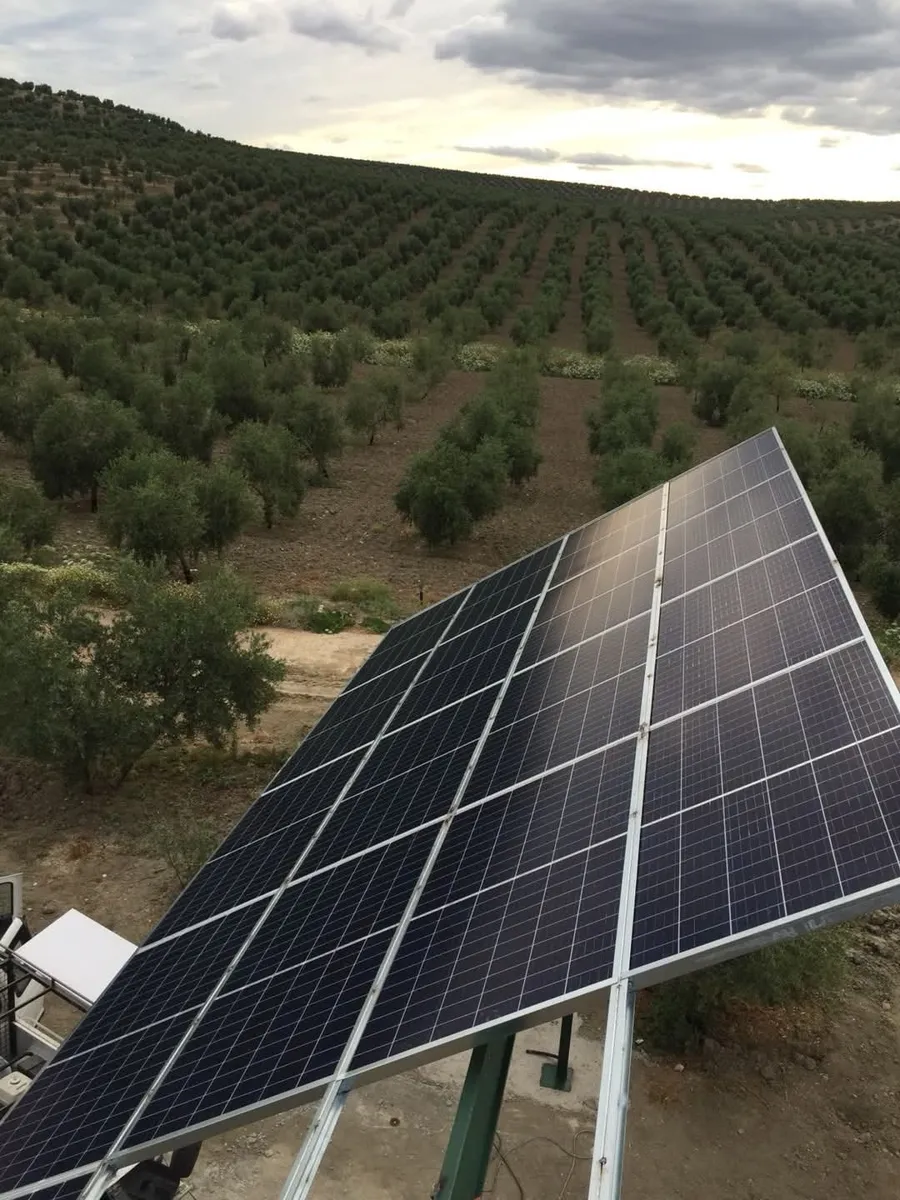
A solar pumping system is a water pump powered directly by photovoltaic solar panels instead of the conventional electricity grid or a diesel generator.
It is the ideal solution wherever the grid does not reach or where bringing it would be very expensive: dry and irrigated farmland, mountain plots, country estates, livestock sheds or ponds far from town.
Compared with combustion engines, solar pumping has much lower running and maintenance costs, is more reliable and has minimal environmental impact: no noise, no fuel and no fumes.
At Enertysur we bring solar pumping to farms, agricultural and livestock operations, irrigation communities and off-grid homes. We design each system around the well, the land and the water the customer needs, and we handle everything: survey, sizing, supply, installation, commissioning and maintenance.
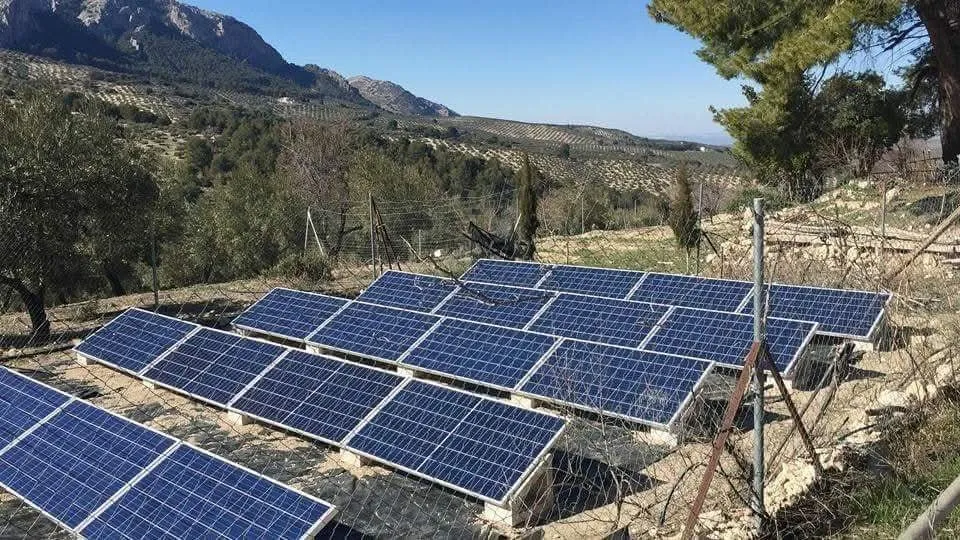
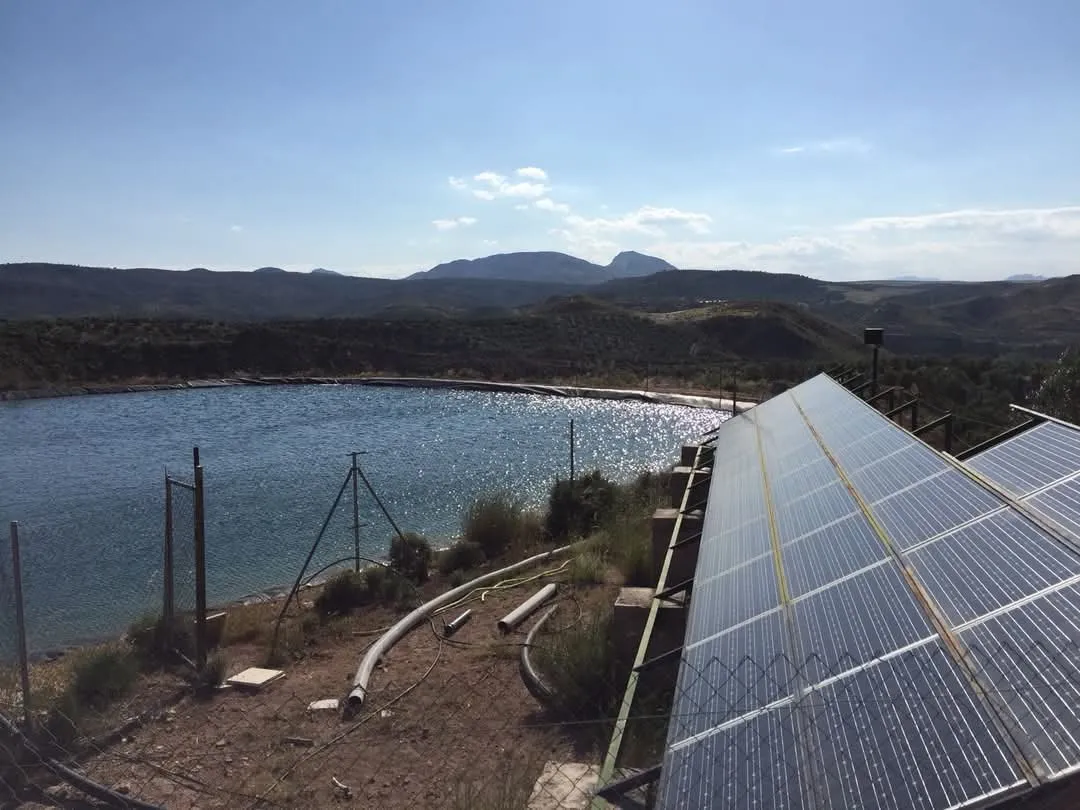
When the sun shines, the pump works; when it does not, it stops. Instead of storing electricity in batteries, water is stored in a tank or pond. The stored water is the system's "battery".
From sun to irrigation in six steps: the panels' energy drives the pump and the water is stored for whenever you need it.
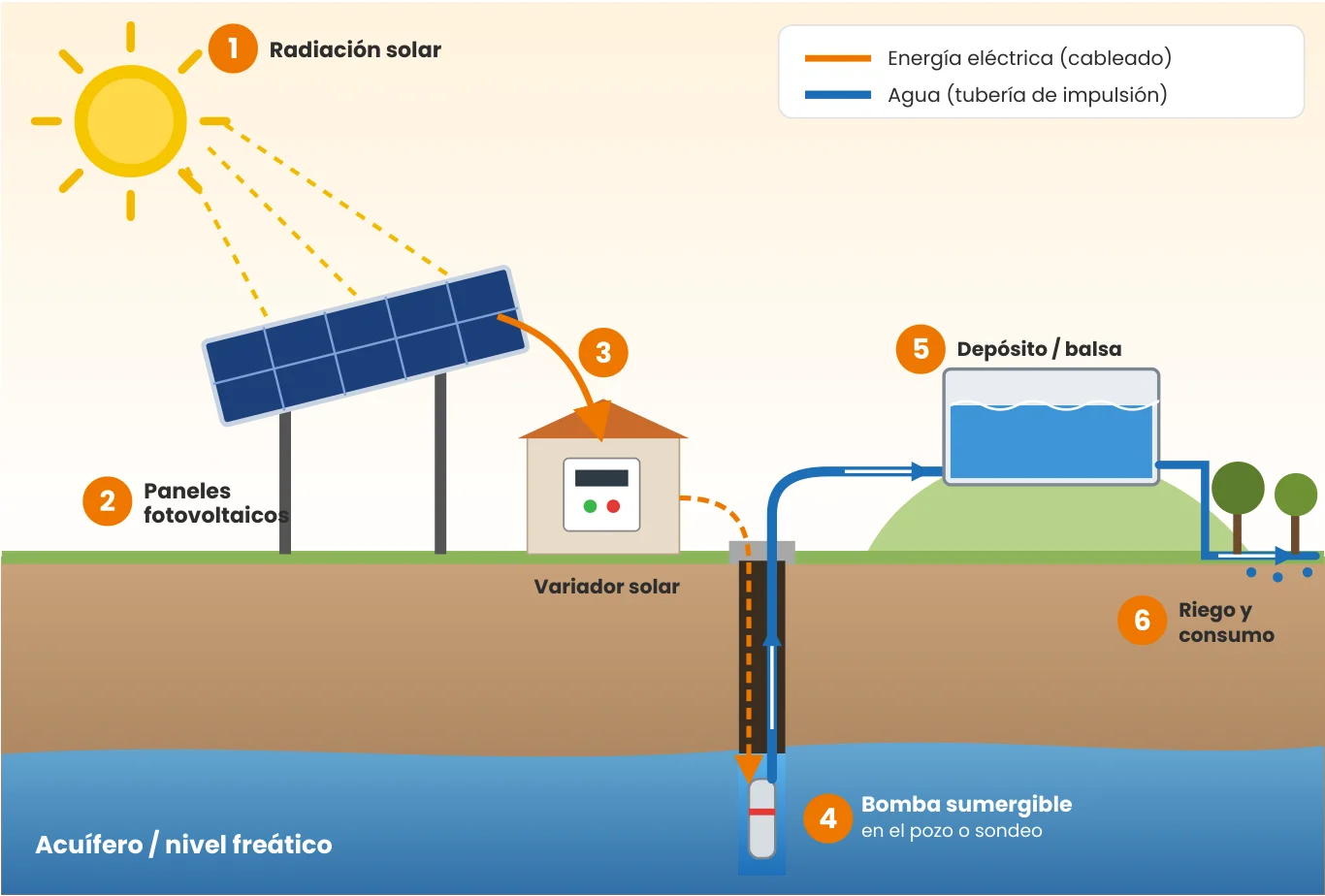
The sun provides the energy. The more radiation, the more power reaches the pump and the more water is moved.
They turn light into direct-current electricity. They are mounted on a fixed south-facing structure, on the ground or elevated.
The brain of the system: it matches the panels' energy to the pump, uses the maximum available power at every moment, soft-starts the pump and protects it (dry running, overvoltage, etc.).
Submersible inside the well or borehole, or surface-mounted if the water is in a tank or pond. It pushes the water through the pipe.
Stores the water pumped during sunny hours so it is available at night or on cloudy days.
From the tank, water is distributed by gravity or with a booster pump to irrigation, drinking troughs or the house.
A direct solar pumping system works to the rhythm of the day: it starts pumping in the first hours of light, peaks at midday and stops at sunset. Meanwhile, the tank or pond fills up and keeps the water for when it is needed.
Batteries are not recommended for pumping: they need maintenance, wear out and are a point of failure. Storing water is cheaper and more reliable.
With float switches or level sensors, the system starts and stops on its own according to the water in the well and the tank level, with no user intervention.
In many cases it can be reused. With a suitable solar drive, a conventional AC pump can run on solar panels without being replaced.
Top-brand solar panels on a galvanised steel structure designed for the wind and terrain of each farm. Their number depends on the pump's power.
Installed in a sealed electrical panel with its protections, isolators and ventilation. It shows the system status and allows manual operation when needed.
Submersible (stainless steel, for wells and boreholes) or surface (for tanks, ponds and irrigation networks). Chosen according to flow rate and head.
Delivery pipe, valves, level sensors and the tank or pond where the water is stored.
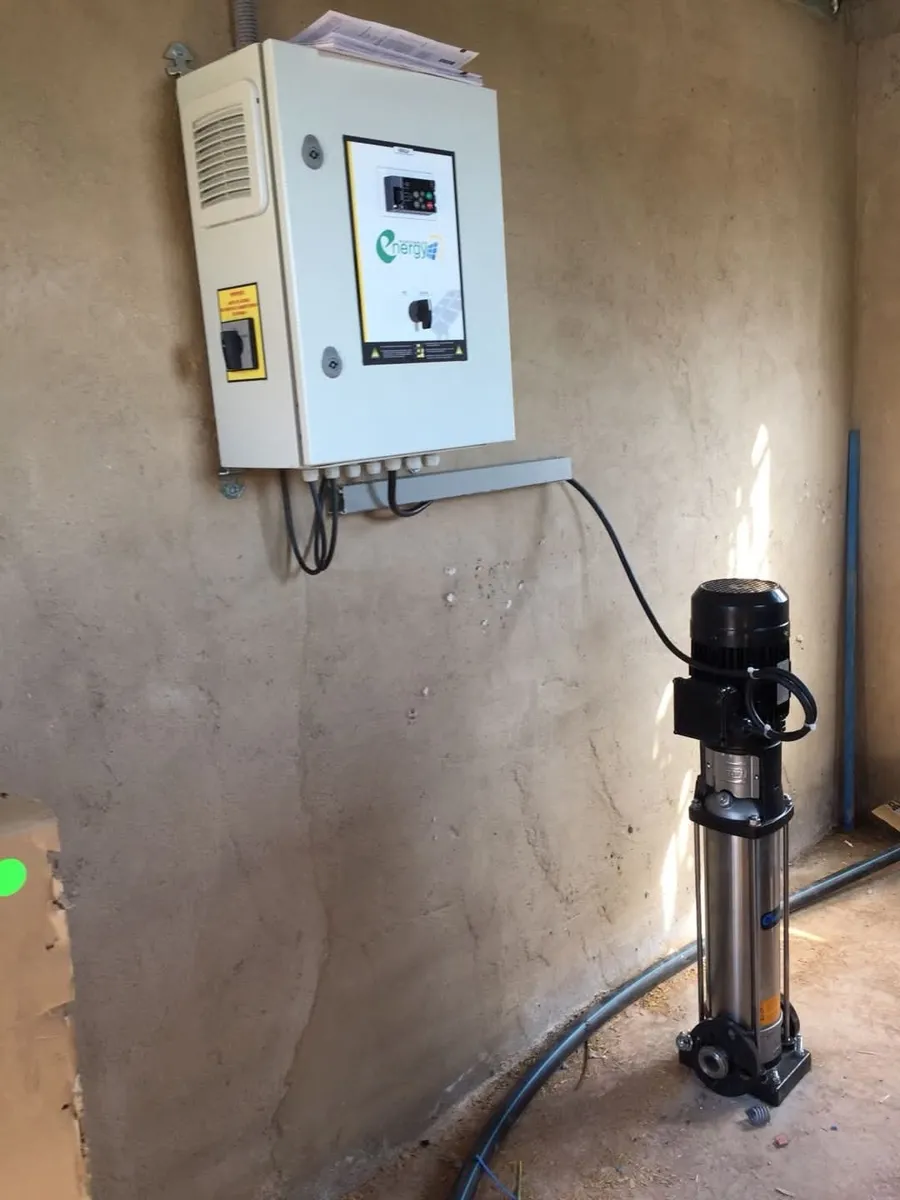
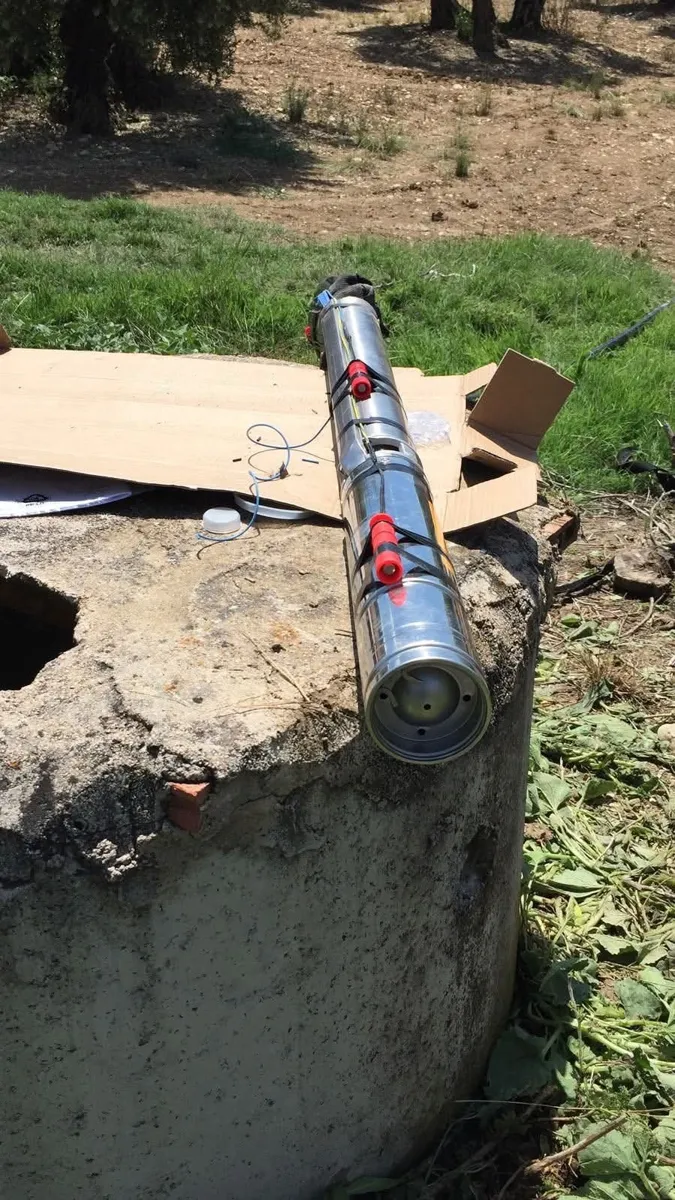
| 04 · Pump types | Submersible pump | Surface pump |
|---|---|---|
| Where it goes | Inside the well or borehole, below the water level | Out of the water: in a pump house, next to the tank or pond |
| Ideal for | Drawing water from great depths (can exceed 100 m) | Moving large flows, irrigating large areas or lifting water to another tank |
| Water source | Wells, boreholes, drillings | Tanks, ponds, rivers, irrigation channels |
| Maintenance | Minimal; no priming needed | Minimal; easy access for servicing |
Pumps can be direct current (DC) or alternating current (AC):
There are also hybrid systems that combine panels with the grid or a generator to guarantee pumping at any time.
Systems from about 0.15 kW for a small drinking trough to over 55 kW for large irrigation networks.
The sun supplies the energy. Forget about electricity bills and price rises.
No refuelling, no fuel transport, no diesel theft and no engine breakdowns.
Works anywhere there is sun, however remote the farm.
No batteries to replace. Just keep the panels clean and carry out periodic checks.
Starts and stops by itself according to the sun and the water level. No need to keep an eye on it.
Panels last for decades and the system has hardly any wearing parts.
No noise, no fumes and no emissions. Clean energy for the countryside.
With no energy or fuel costs, the investment is recovered through the savings.
| Quick comparison | Solar pumping | Diesel generator | Electricity grid |
|---|---|---|---|
| Energy cost | None | High and variable | Monthly bill |
| Needs grid | No | No | Yes (costly connection) |
| Maintenance | Minimal | Frequent | Low |
| Noise and emissions | None | Yes | Indirect |
| Operation | Automatic | Manual / refuelling | Automatic |
Olive groves, almonds, fruit trees, vegetables and woody crops with drip or sprinkler irrigation.
Pumping from a well or river to ponds and tanks so water is available all day.
Supplying drinking troughs and livestock sheds in areas without mains water or power.
Water for country houses, farmhouses and rural cottages, with a booster pump if needed.
Large pumping systems for shared irrigation networks.
Watering green areas, fountains and pool filtration on estates and housing developments.
Every well and every farm is different. To make sure the system delivers the water you need, neither undersized nor oversized, we study three key figures:
The hours of sunshine in your area at each time of year.
The depth of the water plus the elevation and pipe losses.
The cubic metres you need each day in the peak-demand season.
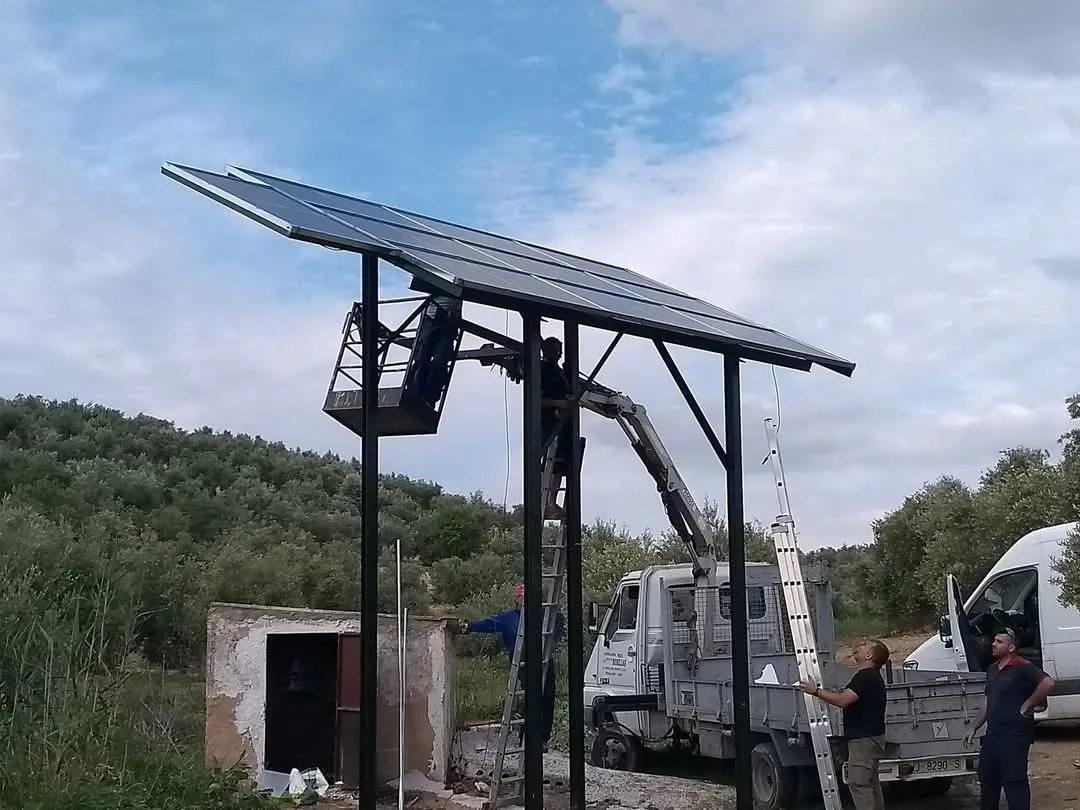
Solar pumping systems installed by our team on farms, olive groves and irrigation ponds.
We know what we do and we do what we love. We are a photovoltaic solar installation company headquartered in Granada with branches all over Spain.
Granada (headquarters), Barcelona, Madrid, Málaga, Seville, Cádiz, Huelva, Córdoba, Jaén, Almería, Murcia, Toledo, Balearic Islands, Mérida, Peñafiel and Canary Islands.
We install equipment from manufacturers such as Huawei, Fronius, Sungrow, Victron Energy, Solis, Hoymiles and Sunfer, among others.
Renewable self-consumption and pumping systems may qualify for public grants depending on the current call in each region. We advise you on those that may apply to your case.
Tell us where your farm is, where you get your water from and how much you need. We will prepare a no-obligation study for you.